The Major Groups and other Stakeholders (MGoS) Coordination Mechanism is pleased to co-convene, together with the Division for Sustainable Development Goals (DSDG) of UNDESA and the Bahá’í International Community, an Informal Exchange Between Stakeholder Representatives and Members of the Independent Group of Scientists (IGS) preparing the 2027 Global Sustainable Development Report (GSDR).
The Global Sustainable Development Report (GSDR) originated in “The Future We Want,” the outcome of the Rio+20 conference on sustainable development, when Member States were laying the groundwork for the 2030 Agenda for Sustainable Development and the 17 associated Sustainable Development Goals (SDGs). Recognizing the power of science to understand and navigate relationships among social, environmental and economic development objectives, the GSDR was designed as an instrument to strengthen the science-policy interface in the relevant intergovernmental process. In 2016, Member States decided further that the GSDR should be produced once every four years, to inform the quadrennial SDG review deliberations (SDG Summit) at the General Assembly, and that it should be written by an Independent Group of Scientists (IGS) appointed by the Secretary-General, of a variety of backgrounds, scientific disciplines and institutions, ensuring geographical and gender balance.
From February to March 2026, UNDESA launched an Open Call for Stakeholder Inputs on behalf of the Independent Group of Scientists to inform the 2027 GSDR. The global consultation was designed to understand stakeholder expectations, to gather examples of main challenges, good practices and lessons learned from integrated SDG implementation, including in low-resource settings, and to identify additional peer-reviewed assessments to complement the IGS’ own research. The open call gathered 347 stakeholder responses from 78 countries. A summary of key messages emerging from the consultation has been published online (Full summary report | Key Takeaways) and shared with the IGS to support and inform the development of the 2027 GSDR.
To build further on the outcomes of the initial exchange and global online stakeholder consultation held earlier this year, the Division for Sustainable Development Goals (DSDG) of UNDESA, in partnership with the Major Groups and other Stakeholders (MGoS) Coordination Mechanism and the Bahá’í International Community, is convening another Informal Exchange Between Stakeholder Representatives and Members of the Independent Group of Scientists for the 2027 GSDR. The exchange will take place on Wednesday 15 July 2026, on the margins of the 2026 High-level Political Forum on Sustainable Development (HLPF). It will provide an opportunity for members of the IGS and stakeholder representatives to engage in further informal dialogue, exchange perspectives, and discuss issues relevant to the preparation of the 2027 GSDR.
Building on this consultation, the upcoming exchange will provide an opportunity for members of the Independent Group of Scientists and stakeholders to engage in an open dialogue on key issues relevant to the preparation of the 2027 GSDR, including priorities for future sustainable development pathways and the role of science, policy, and stakeholder knowledge in shaping the beyond-2030 agenda.
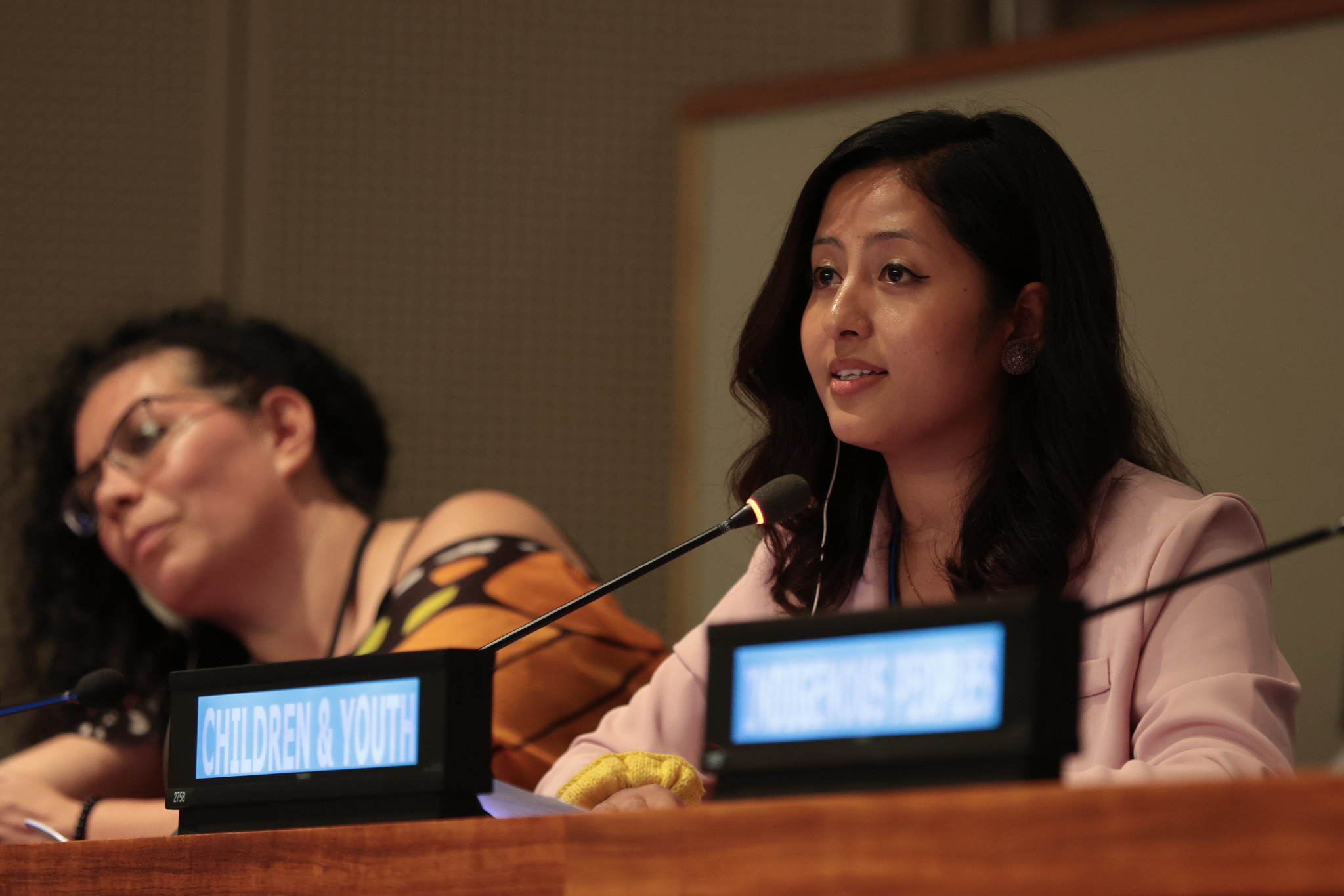
The event is co-organized with the MGoS Coordination Mechanism, and more than 30 representatives of the MGoS constituency attending HLPF 2026 in person in New York are expected to participate in the discussion, bringing perspectives and experiences from civil society, academia, local authorities, Indigenous Peoples, youth, business, trade unions, and other stakeholder communities from across the world.
The meeting will be open to all interested participants through virtual participation.
Please register here to receive the Zoom connection details.