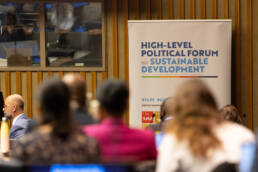
The UN Regional Forums on Sustainable Development (RFSDs) are crucial platforms for driving progress on the 2030 Agenda for Sustainable Development by addressing region-specific challenges, fostering regional cooperation, and promoting inclusive dialogue between governments, regional UN bodies, and diverse stakeholders in the region. The chair’s summary will be submitted to the UN Economic and Social Council (ECOSOC) and conveyed to the 2026 High-Level Political Forum (HLPF).
In 2026, the RFSDs will center on the theme: “Transformative, equitable, innovative and coordinated actions for the 2030 Agenda and its SDGs for a sustainable future for all“
Focus Areas
The 2026 RFSDs will conduct in-depth reviews of the following Sustainable Development Goals (SDGs):
- SDG 6 (clean water and sanitation)
- SDG 7 (affordable and clean energy)
- SDG 9 (industry, innovation, and infrastructure)
- SDG 11 (sustainable cities and communities)
- SDG 17 (partnership for the Goals).
These forums will also support countries preparing their Voluntary National Reviews (VNRs) for the 2026 HLPF, providing an opportunity to showcase progress, share best practices, and identify gaps in implementation.
2026 RFSD Schedule
Asia-Pacific Forum on Sustainable Development (APFSD)
- Dates: 24-27 February 2026
- Location: Bangkok, Thailand
- Facilitator: UN Economic and Social Commission for Asia and the Pacific (ESCAP)
- For stakeholder engagement follow: Asia Pacific RCEM
- More Information: APFSD 2026
Arab Regional Forum on Sustainable Development
- Dates: 31 March – 2 April 2026
- Location: Beirut, Lebanon (Tentative)
- Facilitator: UN Economic and Social Commission for Western Asia (ESCWA)
- For stakeholder engagement follow: ANND
- More Information: Arab RFSD 2025
Latin America and the Caribbean Regional Forum on Sustainable Development
- Dates: 13-17 April 2026
- Location: Santiago, Chile
- Facilitator: UN Economic Commission for Latin America and the Caribbean (ECLAC)
- For stakeholder engagement follow: More information will follow in relation to: Mecanismo de Participacion de la Sociedad Civil de America Latina y el Caribe para el Desarollo Sostenible’ (MeSCALC)
- More Information: TBC
UNECE Regional Forum on Sustainable Development
- Dates: 21-22 April 2026
- Location: Geneva, Switzerland
- Facilitator: UN Economic Commission for Europe (UNECE)
- For stakeholder engagement follow: ECE RCEM
- More Information: UNECE RFSD 2026
Africa Regional Forum on Sustainable Development (ARFSD)
- Dates: 28-30 April 2026
- Location: Kampala, Uganda
- Facilitator: UN Economic Commission for Africa (UNECA)
- For stakeholder engagement follow: ARMMGoS on Twitter
- More Information: ARFSD 2026
Why the RFSDs Matter
The RFSDs provide a unique opportunity to:
- Address regional priorities and challenges in implementing the SDGs.
- Foster collaboration across countries, sectors, and stakeholders to achieve sustainable development.
- Share innovative, science-based solutions and best practices to advance progress on the SDGs.
- Strengthen accountability and peer learning through VNR discussions.
By advancing evidence-based and inclusive approaches, the RFSDs continue to play a critical role in ensuring that no one is left behind in achieving the 2030 Agenda.
The forums create inclusive spaces for diverse stakeholders, including governments, civil society, the private sector, and academia, to engage in meaningful dialogue. This ensures that all voices, including those of marginalized groups, are heard and integrated into the sustainable development agenda. Stay tuned for updates from each RFSD as we work together to create a more sustainable and equitable future.
The Role of Major Groups and Other Stakeholders (MGoS) and the Importance of Regional Engagement
A strong feature of the Regional Forums is the structured role of the MGoS in shaping discussions, proposing solutions, and holding decision-makers accountable. The RFSDs bring the 2030 Agenda closer to national and local realities, offering a more accessible and politically relevant space for civil society, youth, academia, local authorities, Indigenous Peoples, persons with disabilities, and other constituencies to engage. Many stakeholders, especially those unable to access global platforms like the HLPF, use the RFSDs to influence regional priorities, bring evidence from the ground, and highlight challenges that are often overlooked at the global level.
Because the RFSDs are geographically closer and more context-specific, they enable more meaningful, continuous, and inclusive engagement than once-a-year global meetings. Active participation by MGoS strengthens the legitimacy of the forums, ensures that diverse perspectives inform policy discussions, and reinforces peer learning on how civic space, human rights, environmental protections, and social inclusion intersect across regions. In turn, this contributes to more robust VNRs and better implementation of the SDGs.
For stakeholders, the RFSDs are therefore not only preparatory events for the HLPF, they are key advocacy spaces where regional narratives, data, and community experiences can directly shape sustainable development pathways. Strengthening MGoS engagement at the regional level is essential for ensuring that the 2030 Agenda remains people-centered, transparent, and grounded in real challenges and opportunities experienced across different regions.